
Can James Talarico Change the Course of Texas?
Can James Talarico Change the Course of Texas?
He's young, progressive, and fighting in one of the reddest legislatures in America. Is James Talarico a blueprint — or a beautiful lost cause?
By Ivan Davila, The New Brief Politics | May 1, 2026
In the Texas House of Representatives, the math is brutal. Republicans hold a supermajority. The Speaker is conservative. The committee chairs are conservative. The calendar, the rules, the entire machinery of legislating — conservative. For a Democrat to pass a bill in this environment is a minor miracle. For a young progressive Democrat to change the culture of the place? That sounds like a fantasy.
James Talarico has decided to try anyway.
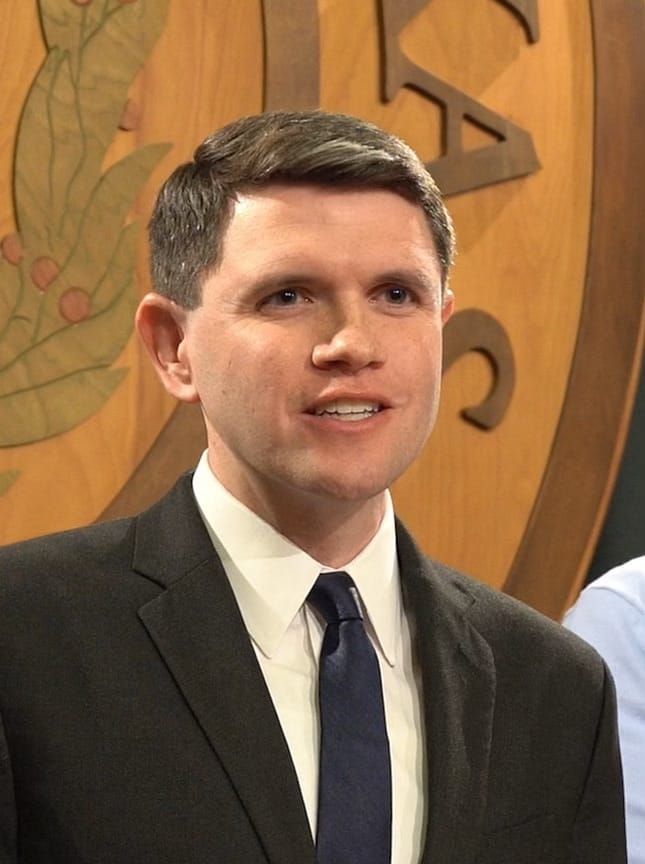
The 33-year-old state representative from the Austin suburb of Cedar Park has become one of the most visible progressive politicians in Texas — and one of the most closely watched young Democrats in the country. He is a former teacher, a former seminary student, a holder of not one but three degrees from UT Austin, and a politician who has an unusual talent for making people in very red districts feel like he is speaking directly to them. He also has an unusual talent for going viral in committee hearings, which in 2026 is not nothing.
But the real question — the one that matters beyond the Twitter clips and the favorable profiles — is whether any of it moves the needle in a state that has been drifting rightward for decades. Can James Talarico actually change Texas?
Who He Is
Talarico grew up in a conservative family in the Dallas suburbs. He was, by his own account, a committed Republican teenager. What changed him, he has said, was teaching — specifically, teaching in underfunded public schools in Round Rock and watching what state budget decisions looked like from the classroom. He ran for the state house in 2018 at age 26, flipped a seat that had been Republican for years, and won re-election twice since.
He's not a centrist Democrat trying to split the difference. He supports Medicare for All, free public college tuition, a living wage, and aggressive climate action — a platform that would be progressive even in a blue state. In Texas, it's practically revolutionary. He has been vocally critical of the Texas Republican supermajority's attacks on public education, voting rights, abortion access, and LGBTQ+ youth.
He has also, at various points, talked openly about his Christian faith — a deliberate choice in a state where religion and conservative politics have become almost synonymous. It's a signal: I'm not the enemy you've been told about. Whether it works depends on who's listening.
The Strategy: Losing as a Long Game
"The Texas legislature is where progressive bills go to die. Talarico knows this. His bet is that what happens on the floor matters less than what happens in the culture."
Here is the uncomfortable truth about Talarico's situation: he cannot pass legislation. Not the legislation he actually cares about. In a chamber where Republicans hold supermajority control, a progressive Democrat's bills don't make it out of committee. They die quietly, without a vote.
Talarico knows this. His bet is that what happens on the floor of the Texas House matters less than what happens in the culture — that a young, articulate, unapologetically progressive voice in a deep-red legislature does something that legislation can't. It makes people, especially young people, feel like the fight is being fought.
He has leaned into this theory. His floor speeches and committee testimony regularly go viral — not because they change votes in Austin, but because they reach people across Texas who had assumed no one in their state government sounded like that. His argument on teacher pay. His testimony against anti-trans legislation. His pushback on book bans. None of it passed. All of it was watched.
It is, in a sense, a media strategy dressed up as a legislative one. Critics — including some Democrats — argue that going viral is not governing. That's a fair point. But in a state where Democrats have been functionally locked out of power for a generation, the question of what else to do with a minority seat is genuinely hard. You can be a quiet, pragmatic dealmaker who occasionally negotiates minor concessions from the majority, or you can be a megaphone. Talarico has chosen the megaphone.
Can Texas Actually Turn? The Numbers Say: Eventually.
The backdrop to Talarico's career is a Texas that is, slowly, changing. The state's population has grown dramatically in the last decade — and a disproportionate share of that growth has been driven by younger voters, Latino voters, and transplants from blue states. Austin, Dallas, Houston, and San Antonio are now among the most Democratic urban areas in the country. Texas went from a 9-point Trump win in 2020 to a narrower margin in 2024.
It is not a blue state. It is not close to a blue state. But it is a state where the ceiling on Democratic ambitions has been rising. Demographers have been predicting a competitive Texas for fifteen years; it has not arrived yet. But the direction of travel is real, even if the timeline remains frustratingly vague.
"Texas has been 'turning blue' for fifteen years according to demographers. For young Texans who need change now, the long game is cold comfort."
For young Texans who need change on healthcare, education, or abortion access right now, the long game is cold comfort. Talarico's pitch to them is essentially: help me build the movement that gets us there faster. Register voters. Run for school board. Show up. He is less a legislator at the moment than a recruiter — trying to convince a generation of young Texans that the state is worth fighting for rather than fleeing.
Why He Matters to You, Even If You Don't Live in Texas
Texas sends 38 electoral votes to the presidential election. It sends 38 members to the U.S. House of Representatives. It is the second-largest economy in the country. If Texas becomes competitive — even occasionally — it reshapes American politics in ways that would be felt everywhere. A Texas that requires serious Republican investment to win is a Texas that siphons resources from Ohio, Pennsylvania, and Arizona.
Talarico also represents something of a test case for a broader question that the Democratic Party is still working through: what does a progressive politician look like in a place that isn't predisposed to like them? Not a moderate who sands off the edges and hopes for the best. Not a purist who'd rather lose clean than win messy. Something different — someone who holds the full progressive position on policy while still finding a language that doesn't immediately alienate the person across the aisle.
Whether he's actually found that language, or whether he just seems that way from the outside, is something only Texas voters can ultimately answer.
The Verdict
Can James Talarico change the course of Texas? Probably not alone. Probably not soon. The structural obstacles — gerrymandering, money, a decades-old Republican machine — are enormous, and no single politician, however talented, dismantles them by force of personality.
But he is doing something real: making the case, loudly and in public, that Texas is not monolithic. That young people there are watching. That the fight is worth having. In a political environment where young progressives are increasingly being told to be realistic, to accept incremental change, to stop dreaming so loud — Talarico is one of the people still dreaming loud in a place where it costs him something.
That's not nothing. It might even be exactly what Texas needs right now.
— The New Brief | Politics | May 2026 —