Record S&P, $100 Oil, and a Market That Can't Decide What It Thinks

The S&P 500 just closed above 7,300 for the first time. Oil is hovering around $100 a barrel. These two numbers are telling opposite stories — and both of them affect you directly.
By The New Brief Finance Desk | May 12, 2026
On the surface, the U.S. economy looks strong. The S&P 500 hit a record close above 7,300 last week — the first time the index has ever closed at that level. Earnings are beating estimates by wide margins. Unemployment is low. GDP is growing. By the conventional metrics, this is a healthy economy.
One floor below that surface, oil is trading around $100 a barrel — up more than 50% since February — and everything that depends on cheap energy is under pressure. The contradiction between booming stock prices and elevated commodity costs is the defining tension in the 2026 market. Here is how to read it.
The S&P Record — What It Does and Doesn't Mean
The S&P 500 hitting 7,365 is a real milestone, and the reasons behind it are real: corporate earnings have been exceptional, with blended S&P 500 earnings growth for the quarter running at 27.1% — far above where analysts started the quarter. Technology, driven by AI infrastructure spending, is the standout. Communication services and materials are also posting strong numbers. Earnings strength is broadening beyond the mega-caps, which is a healthy sign for the rally's durability.
7,365 S&P 500 record intraday high hit May 5, 2026
27.1% blended S&P 500 earnings growth for the quarter — far above expectations
What the S&P record does not mean: that the economy is problem-free, that inflation is solved, or that the risks ahead are priced correctly. Stock markets are forward-looking — they reflect what investors expect to happen, not what is happening now. Right now, investors appear to be betting that the Iran ceasefire holds, oil comes back down, the Fed doesn't have to hike, and earnings growth continues. That is a lot of assumptions to get right simultaneously.
"The S&P at a record high means investors are optimistic. It does not mean the risks are small. Sometimes the market is wrong about that."
Oil at $100 — The Counterweight
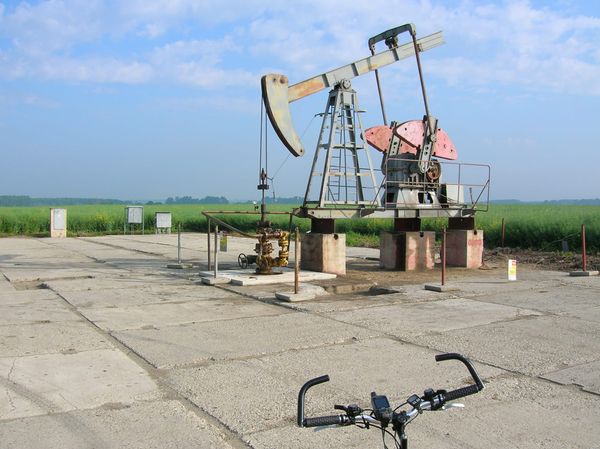
WTI crude settled at $106 at its recent peak, with Brent touching $114. Both have pulled back modestly as diplomatic signals from the Iran situation emerged — but oil remains stubbornly elevated relative to pre-conflict levels, and the factors keeping it high have not been resolved.
The U.S. Navy is escorting commercial shipping through the Strait of Hormuz, through which approximately 20% of global oil trade flows. Any disruption to that transit — a naval incident, an escalation, a decision by Iran to close the strait — would send oil prices surging again immediately. The market is treating the current ceasefire as durable. It may be wrong.
$106 WTI crude peak price per barrel — up 50%+ since Feb. 28 conflict start
20% share of global oil trade that transits the Strait of Hormuz
For everyday Americans, oil at $100 is already consequential: higher gas prices, higher airfare, upward pressure on food prices, and inflation expectations that are keeping the Fed from cutting interest rates. The stock market can be at a record and your cost of living can still be rising. Both things are true right now.
The Tension That Defines This Market
Here is the core contradiction: S&P earnings are booming partly because of AI spending and partly because companies have been able to pass higher costs to consumers. But consumers can only absorb so much. Planet Fitness just slashed its 2026 outlook after membership signups fell 36%. Shake Shack missed earnings badly. These are canary-in-the-coal-mine signals that consumer spending is starting to crack at the edges.
If the consumer cracks while oil stays elevated and the Fed holds rates high, corporate earnings in the second half of 2026 will be under significant pressure. The S&P at 7,365 will look very different in October if that scenario plays out.
The optimistic case: the Iran situation resolves, oil comes back to $75-80, the Fed cuts once or twice, consumer confidence stabilizes, and the AI-driven earnings boom continues into 2027. That case is possible. It requires a lot of things to go right.
WHAT TO WATCH: Three numbers to track over the next 30 days: (1) WTI crude — if it breaks back above $105, inflation expectations will re-spike. (2) The 10-year Treasury yield — if it climbs past 4.5%, mortgage rates follow. (3) Consumer confidence data — the leading indicator of whether spending holds up through the summer.
What This Means for Your Money
If you have money in index funds tracking the S&P 500 — through a 401(k), a Roth IRA, or a brokerage account — the record high is good news for your balance. Don't let that number make you complacent about the risks in the underlying economy.
If you are planning a large purchase that requires borrowing — a car, a home, a graduate degree — do the math now on what 6.3% mortgage rates or elevated student loan rates mean for your monthly payment and lifetime cost. The cost of borrowing money is real and high, regardless of what the stock market is doing.
And if you are just starting to invest and feeling like you've missed the rally: you haven't. Long-term investing in broadly diversified index funds is not about timing the market. It is about time in the market. A 23-year-old who invests consistently through a volatile period in 2026 will be in a dramatically better position at 43 than one who waited for the "right moment."
— The New Brief | May 12, 2026 —