
Inside the New Cold War Between America and China
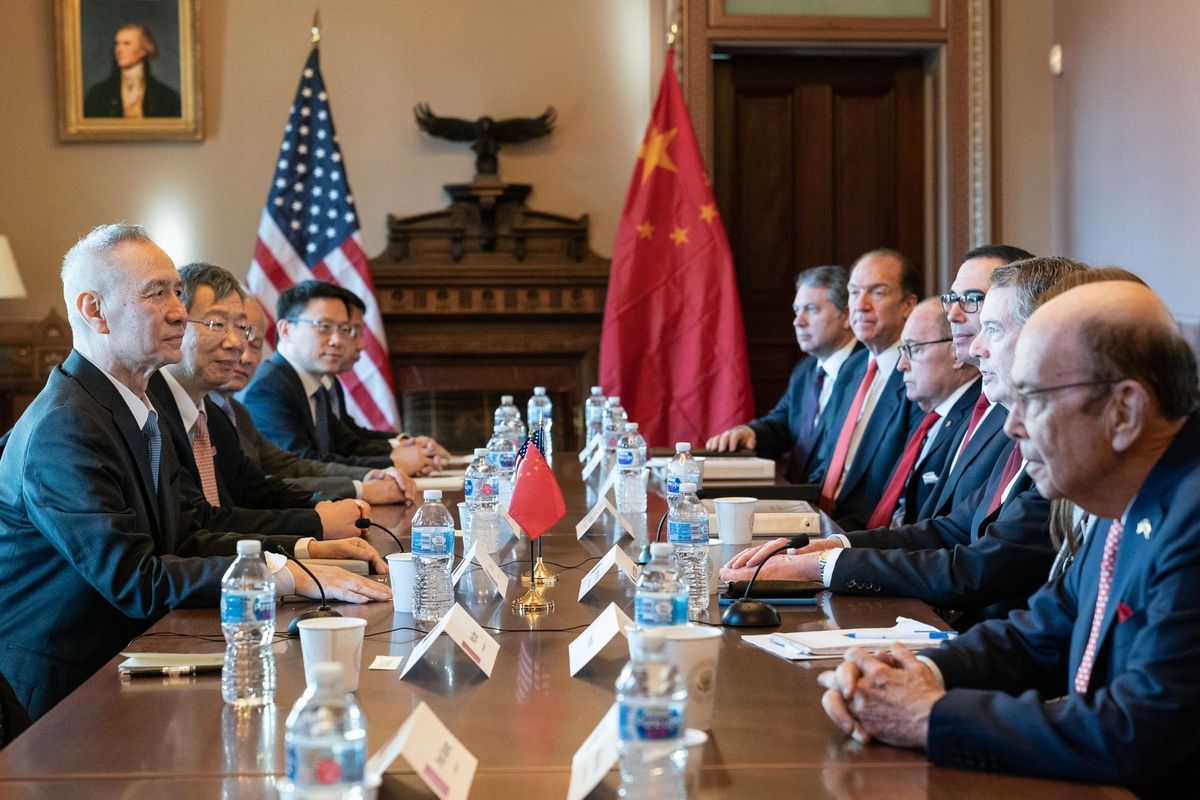
Chips. TikTok. Tariffs. Rare earths. AI. The rivalry between the U.S. and China is reshaping every major technology in your life — and most people have no idea how deep it goes. Here's your plain-English guide.
By The New Brief Politics Desk | May 12, 2026
The United States and China are not at war. But they are not at peace either. What they are in is something closer to the original Cold War — a sustained, multi-front competition for technological dominance, economic leverage, and global influence that is quietly reshaping every major industry, every supply chain, and every piece of technology you interact with daily.
Unlike the original Cold War, this one is not primarily about missiles and ideology. It is about semiconductors and social media algorithms and who controls the minerals that power the batteries in your phone. Here is what you actually need to know, broken down by front.
🔷 CHIPS — The Silicon Battle
Semiconductors — the chips inside every phone, laptop, car, and AI system — are the oil of the 21st century. Whoever controls chip production controls the infrastructure of the modern economy. Right now, the United States designs the most advanced chips in the world, primarily through companies like Nvidia and AMD. But it manufactures almost none of them domestically — the majority are made in Taiwan by TSMC.
China wants to change that equation. It has invested hundreds of billions of dollars trying to build a domestic chip industry capable of producing advanced semiconductors without U.S. technology. The U.S., for its part, has imposed sweeping export controls blocking the sale of advanced chips and chip-making equipment to China.
The result: a full-blown technology decoupling. American companies are being pulled in two directions — massive revenue from Chinese markets on one side, government pressure and national security restrictions on the other. Nvidia recently received licenses to sell some AI chips to China, a partial reversal that signals the tension between economic and strategic interests is not resolved.
$52B U.S. CHIPS Act investment in domestic semiconductor manufacturing
WHY IT MATTERS TO YOU: Your phone, your laptop, your streaming service, your AI assistant — all of it runs on chips. If this rivalry escalates into a full embargo, the price of every piece of consumer electronics goes up. The CHIPS Act is trying to change that by building U.S. manufacturing capacity. It is a generational bet.
📱 TIKTOK — The App That Became a Bargaining Chip
TikTok has become one of the strangest objects in American trade policy: an app used by 170 million Americans that is simultaneously a national security concern, a cultural phenomenon, and a literal bargaining chip in tariff negotiations with China.
The U.S. government spent over a year demanding ByteDance — TikTok's Chinese parent company — divest its ownership of the platform or face a ban. A deal nearly happened. Then Trump imposed sweeping tariffs on Chinese goods, and China responded by halting TikTok divestiture negotiations entirely, using the app's fate as leverage in the broader trade fight.
The result: TikTok's future is now entangled with the outcome of the U.S.-China trade war. If tariffs come down, a deal may be back on the table. If they escalate, TikTok stays in limbo — or gets banned — and 170 million American users are caught in between.
"TikTok is no longer just an app. It's a trade negotiation tool. Your For You page is geopolitics now."
💰 TARIFFS — The Tax You Pay Without Knowing It
After returning to office, Trump reimposed and dramatically escalated tariffs on Chinese goods, eventually pushing both sides to tariff rates exceeding 100% on certain product categories. Both countries met in Geneva in May and struck a 90-day truce to bring rates down — but Trump has since accused China of violating the deal by failing to fully roll back restrictions on critical mineral exports.
Tariffs are not paid by China. They are paid by American importers — companies that buy goods from China — who then pass the cost to consumers. The price increases are dispersed across thousands of product categories: electronics, clothing, furniture, toys, appliances. They don't show up as a line item on your receipt. They just make everything a little more expensive.
100%+ peak U.S.-China tariff rates during escalation this spring
13.7% average U.S. tariff rate on Chinese goods, even after Geneva truce
THE BOTTOM LINE: Tariffs are a stealth tax on American consumers. A 13.7% average tariff on Chinese imports — which constitute a massive share of U.S. retail goods — means prices are structurally elevated in ways that hit lower- and middle-income households hardest.
⛏️ RARE EARTH MINERALS — China's Trump Card
Here is a fact that does not get enough attention: China controls approximately 60% of the world's rare earth mineral mining and roughly 85% of processing capacity. Rare earths — a group of 17 elements with names like neodymium, dysprosium, and praseodymium — are essential components in electric vehicle motors, wind turbines, smartphones, military guidance systems, and advanced semiconductors.
When the tariff fight escalated this spring, China did something it had previously avoided: it began restricting rare earth exports to the United States. The move is China's most powerful economic leverage tool, and it is now being used. Brazil, which Trump hosted at the White House last week, was partly there to discuss alternative rare earth supply chains — a signal that the administration understands how exposed the U.S. is.
"China controls the minerals that power everything from your iPhone to an F-35. That is not a tech story. That is a national security story."
🤖 AI — The Real Endgame
Beneath all the trade fights and technology restrictions, the fundamental competition is over artificial intelligence. Both governments have explicitly identified AI dominance as a central national priority. The U.S. leads in AI model development — OpenAI, Google DeepMind, Anthropic, Meta AI — and in the chip hardware that powers AI training. China is closing the gap faster than most Americans realize.
The export controls on advanced AI chips are an attempt to slow China's AI development by denying it the hardware needed to train frontier models. Whether it works depends on how quickly China can develop comparable chips domestically — which is the entire logic behind its massive semiconductor investment program.
The stakes: whoever leads in AI in 2030 and beyond will have decisive advantages in economic productivity, military capability, and global technological influence. This is not a trade dispute. It is a competition for the defining technology of the century, and it is happening right now.
— The New Brief | May 12, 2026 —