Jerome Powell, the Last Fed Chair Who Said No.
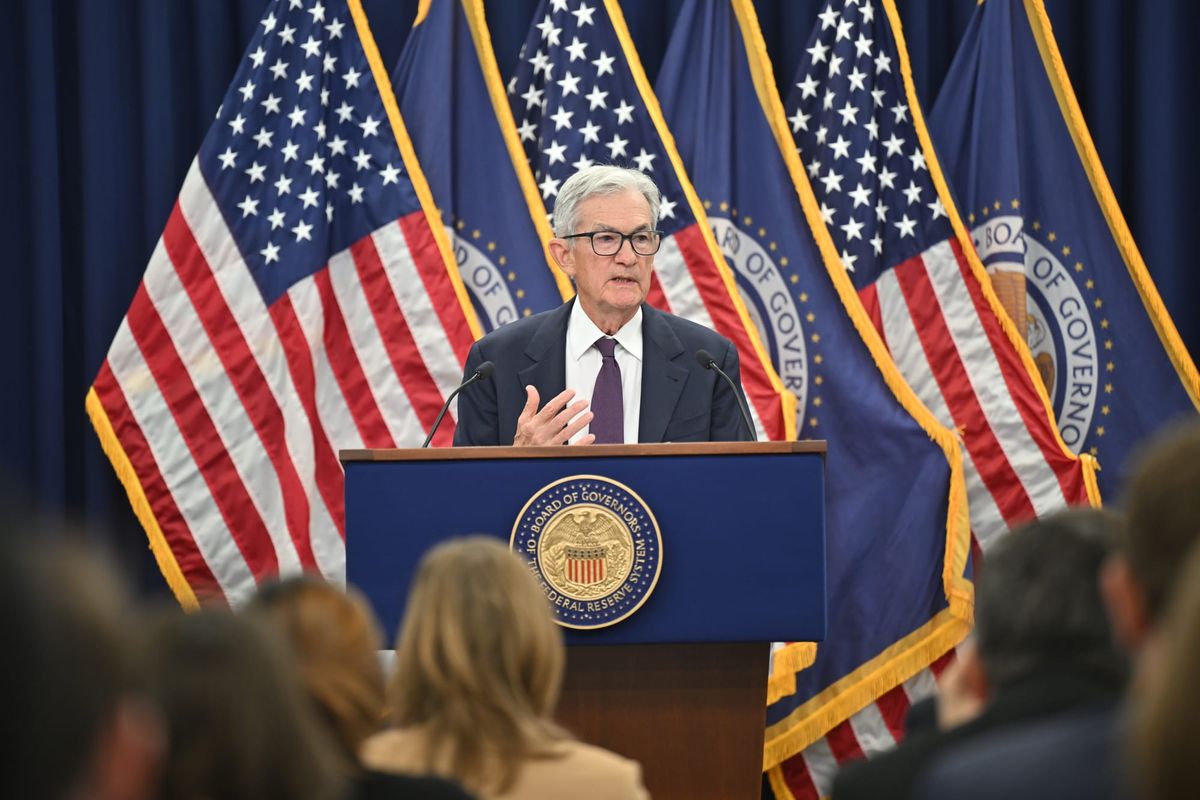
With the end of Jerome Powell's term as Chair of the Federal Reserve, here you can find a reminder of the legacy behind this legend.
Jerome Powell spent eight years fighting inflation, markets, and a president who called him his biggest enemy. Here's what his tenure really meant — and why it should matter to you, young American.
By Ivan Davila, The New Brief Politics | May 1, 2026
Jerome Powell is not a progressive hero. He's a Republican lawyer who made his fortune in investment banking, was appointed to the Federal Reserve by Donald Trump on his first term, and spent years raising interest rates in a way that made mortgages more expensive for millions of young Americans. He is not someone whose poster you'd hang up, per say.
And yet, when Powell steps down as Fed Chair this month after eight years at the helm of the most powerful financial institution on Earth, the thing worth mourning is simple: he was one of the last people in Washington who told the president no — and actually made it stick.
That stubbornness — boring, technocratic, relentless — turns out to matter more than it sounds.
The Inflation Fight: The Good, the Bad, and the "Transitory"
When COVID hit in March 2020, Powell's Fed did what central banks do in a crisis: it slashed interest rates to near zero and pumped trillions of dollars into the economy to keep it from collapsing. It worked. A crash that looked like it could become a depression lasted just two months.
The hangover, though, was brutal. As the economy reopened and government stimulus flooded consumers' bank accounts, prices started climbing. Then they kept climbing. By June 2022, inflation hit 9.1% — the highest in 40 years. Gas, groceries, rent: everything cost more. For young people already stretched thin by student debt and stagnant wages, it was a gut punch.
Powell made one big mistake during this stretch that he will never fully live down: in 2021, he called the inflation "transitory" — central bank-speak for "it'll pass on its own." It didn't. Critics on the left and right hammered him for being too slow to act. The critique has merit.
"Powell made one big mistake he'll never live down — calling inflation 'transitory.' But what he did next defined his legacy."
What he did next defined his legacy more. Starting in March 2022, Powell launched one of the most aggressive interest rate-hiking campaigns in Fed history, raising rates from near zero to 5.25–5.5% in just over a year. Economists warned this would cause a recession. It didn't. Unemployment stayed historically low. GDP kept growing. Inflation came down. The so-called "soft landing" — cooling prices without crashing the economy — was widely considered impossible, and Powell more or less pulled it off.
For young people, the cost was real: mortgage rates hit 8% at their peak, pricing an entire generation out of homeownership in much of the country. But the alternative — sustained 9% inflation eroding every paycheck and every dollar of savings — would have been worse. The math of the Fed is always cruel in some direction.
Trump vs. Powell: A Fight That Was Always About More Than Interest Rates
Donald Trump appointed Powell in 2018, and almost immediately regretted it. When the Fed raised rates that year to cool an overheating economy, Trump went on a months-long public rampage. He called Powell his "biggest threat." He called him an "enemy." He asked aides whether he could fire him. He reportedly asked why he'd appointed such a person.
Powell didn't budge.
That pattern repeated itself in Trump's second term, which began in January 2025 — but with the stakes dramatically higher. Trump arrived back in the White House having spent years attacking the Fed, and his advisers wasted no time. White House officials openly explored legal mechanisms to remove Powell before his term expired. Trump publicly demanded rate cuts. Allies floated replacements. The message was clear: get in line, or get out.
"I will not resign." — Jerome Powell, responding to pressure from the Trump White House, 2025
Powell's response was characteristically flat and absolute: "I will not resign." He added, for legal clarity, that he didn't believe the president had the authority to remove a Fed Chair except for cause — and that serving out his term was his intention. He gave no speeches. He gave no interviews that wandered into politics. He simply kept showing up to work, setting interest rates according to the data, and ignoring the noise.
Why does any of this matter to someone who's 22 and worried about their student loans?
Because the Federal Reserve's independence from political pressure is one of the quieter guardrails of democratic governance. When a president controls monetary policy, he controls whether the economy feels good or bad heading into an election. He can juice growth before a vote, punish his enemies by tightening credit, or print money to fund policies Congress won't authorize. Fed independence isn't abstract — it's what stands between sound monetary policy and the economic chaos that has wrecked democracies in other countries.
Powell understood this. He held the line. It cost him politically. He held it anyway.
What Comes Next — and Why You Should Pay Attention
Powell's term as Fed Chair ends this month. He can stay on as a Fed Governor until January 2028, but the chair role — the seat of real power — now passes to whoever Trump nominates. The frontrunners, as of this writing, are figures with one thing in common: a far greater willingness to accommodate the White House.
What does that mean in practice? Potentially a lot. A more politically pliant Fed chair could cut interest rates faster than the data warrants — making the economy feel good in the short term, but raising the risk of renewed inflation. Or the mere perception that the Fed is no longer independent could spook bond markets, sending long-term borrowing costs higher regardless of what the Fed does with short-term rates. Either scenario lands hardest on people just starting out: young people taking on mortgages, carrying student debt, trying to build something.
"The Fed chair matters more to your financial life than almost any other appointee — and almost nobody your age is watching who gets the job."
There's also a constitutional dimension that remains unresolved. Courts are still working through questions about whether the president can fire heads of independent agencies — and the Fed Chair's legal protections are among the most debated. Whoever sits in the chair may face a legal landscape that either expands presidential control over the Fed or cements its independence for a generation. The stakes could not be higher.
For young progressives specifically, the instinct is often to tune out Fed news as dry, elite, far-from-my-life finance stuff. That instinct is understandable and wrong. Interest rates determine whether you can afford to buy a home. They shape whether employers are hiring or freezing. They affect what your savings are worth. The Fed chair matters more to your financial life than almost any other presidential appointee — and almost nobody your age is watching who gets the job.
The Boring Things Are the Load-Bearing Things
Powell's legacy is genuinely complicated. He was too slow on inflation. He presided over a rate environment that locked a generation out of homeownership. His background — elite law, private equity, Republican politics — is not the biography of a progressive champion. None of that is erasable.
But the through-line of his tenure is something worth naming plainly: he refused to let an authoritarian-leaning president bend a critical institution to his will. He did it without drama, without grandstanding, without turning himself into a martyr or a symbol. He just kept doing his job, according to his mandate, until his time was up.
That's not inspiring in the way that a great speech or a protest march is inspiring. It's inspiring in the quieter, grimmer way that institutions need to be — by demonstrating that the rules can hold, even when someone powerful wants them not to.
As you watch his replacement take the chair, ask one question: will they do the same?
— The New Brief | Politics | May 2026 —