Trump vs. the Fed: The Fight That Will Define Your Economic Future
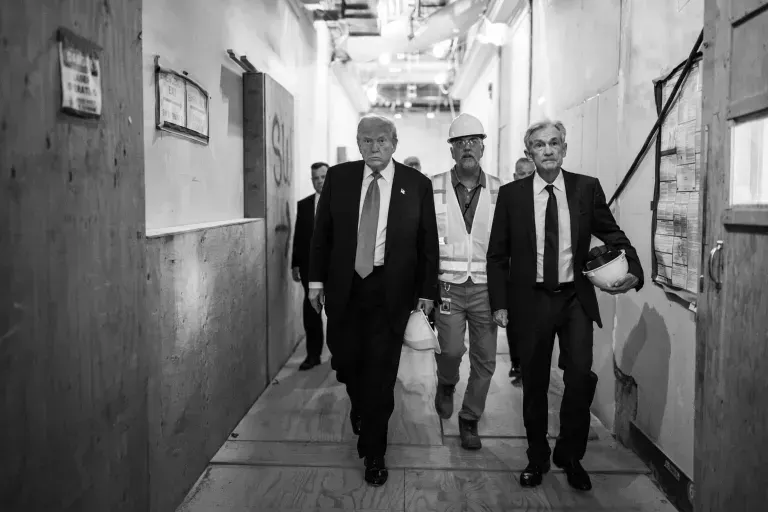
The administration's war on Federal Reserve independence is escalating. Jerome Powell is nearly gone. Kevin Warsh is waiting. And the outcome of this fight will shape interest rates, inflation, and your financial life for years.
By The New Brief Politics Desk | May 7, 2026
Here is the thing about the Trump administration's conflict with the Federal Reserve that most political coverage gets wrong: it is not primarily a story about personalities. It is not really about whether Donald Trump likes Jerome Powell or whether Powell is being stubborn. It is about something much larger and more consequential — whether the president of the United States should be able to direct monetary policy, and what happens to the economy if he can.
That question is now being answered in real time. And the answer being constructed will outlast any individual administration.
Where Things Stand
Jerome Powell's term as Fed Chair ended this month. Kevin Warsh — a former Fed governor, Wall Street veteran, and Trump loyalist — is the president's nominee to replace him. The Senate confirmation process is underway, but Warsh's eventual confirmation is widely expected.
While the transition plays out, the Trump administration has maintained sustained public pressure on the Fed to cut interest rates — pressure that Powell consistently and publicly resisted. Trump called the Fed's rate decisions wrong. He suggested Powell should be fired. He had aides explore the legal mechanisms for removing him. Powell said he would not resign and that the law did not allow his removal for political disagreement.
The Supreme Court has cases pending that could clarify — or expand — the president's power to remove heads of independent agencies. If those rulings go in Trump's favor, the legal insulation that has protected Fed independence for decades could dissolve. The fight is not just political. It is constitutional.
"If the president can direct the Fed's rate decisions, monetary policy becomes an electoral tool. Lower rates before an election. Tighten after. The economy becomes a campaign mechanism."
Why Fed Independence Exists — and What Happens Without It
The Federal Reserve was designed to be politically independent for a specific reason: elected officials have short time horizons and strong incentives to juice the economy before elections, even if it causes long-term damage. A president facing midterms wants low interest rates — low rates make borrowing cheap, business investment rises, unemployment falls, and the economy feels good in the short term. The inflation that follows tends to arrive after the vote.
An independent Fed can say no to that calculation. It can hold rates higher than politicians prefer because its mandate is price stability and maximum employment over the long term, not the president's approval rating over the next six months.
A politicized Fed cannot say no — or at least, not credibly. And a Fed that cannot credibly say no to political pressure loses the one thing that makes it powerful: the market's trust that it will do what the data requires, not what the White House wants. When that trust erodes, inflation expectations become unanchored, long-term interest rates rise regardless of what the Fed does, and the economy becomes harder to manage for everyone.
The Tariff Complication
The conflict between Trump's tariff strategy and the Fed's inflation mandate is making an already complicated situation worse. Tariffs are inflationary — they raise the cost of imported goods, which raises prices across the economy. The Fed's job, when inflation rises, is to raise interest rates to cool demand.
But Trump wants lower rates. He wants the economic stimulus of cheap borrowing. And his tariff policy is simultaneously creating the inflationary pressure that makes lower rates dangerous. The administration is, in effect, pressuring the Fed to cut rates while pursuing policies that make cutting rates more likely to cause the inflation the cuts are supposed to prevent.
Courts have already struck down parts of the emergency tariff program. Congress is now a central battleground over how much trade authority the executive branch can exercise unilaterally. The legal fight over tariffs and the political fight over the Fed are separate battles in the same war — over how much economic power the presidency can accumulate, and whether any institution can effectively check it.
"Trump wants cheap borrowing and expensive imports simultaneously. Those two goals are in direct economic conflict — and the Fed is caught in the middle."
What It Means for You
If Warsh takes the Fed chair and governs as a political instrument of the White House — cutting rates when Trump wants cuts, communicating in ways designed to please the market rather than discipline it — the most likely short-term outcome is an economic sugar rush: cheaper borrowing, higher asset prices, a temporarily good-feeling economy.
The long-term outcome of sustained political interference in monetary policy, based on every historical precedent available, is inflation that is harder to control, interest rates that eventually have to go higher to restore credibility, and an economy that is more volatile and less predictable. Young people — who are just beginning to build wealth, who are taking on student debt, who are trying to enter the housing market — bear the most risk in that environment.
This is not a story about Washington insiders fighting over bureaucratic turf. It is a story about who controls the economic conditions of your life. Pay attention to it.
— The New Brief | May 7, 2026 —