Who is Jared Kushner
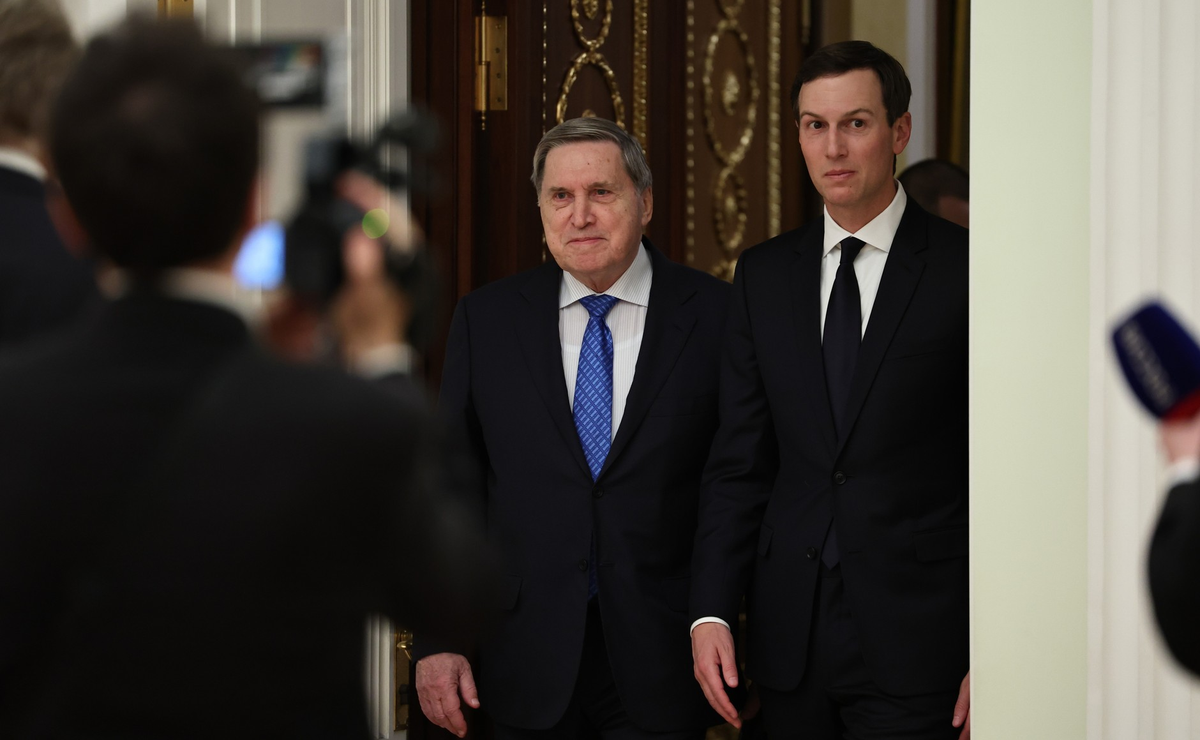
Who Is Jared Kushner?
He was handed the Middle East, the opioid crisis, and criminal justice reform — all at once. Then he left the White House and took $2 billion from Saudi Arabia. Here's everything you need to know about the most powerful person you've probably been ignoring.
By The New Brief Politics Desk | May 1, 2026
There is a specific kind of powerful person who is most dangerous precisely because most people don't know their name. They don't give speeches. They don't hold press conferences. They move quietly through rooms that matter, carrying influence that was never voted for, never confirmed by the Senate, and never really explained to the public.
Jared Kushner is that person.
He is the son-in-law of the President of the United States. He was a senior adviser in the White House during Trump's first term, charged with an assignment list so absurdly long it read like a joke: solve the opioid crisis, reform criminal justice, modernize the federal government, manage relations with Mexico and China, and oh yes — bring peace to the Middle East. He left Washington in 2021, and within months was running a private equity firm that received two billion dollars from the sovereign wealth fund of Saudi Arabia.
You should know who he is. This is where to start.
The Background: Money, Harvard, and a Father in Prison
Jared Corey Kushner was born in 1981 in Livingston, New Jersey, the second child of Charles and Seryl Kushner. The family was wealthy — seriously wealthy. Charles Kushner had built a real estate empire across New Jersey and New York, and the family name was on buildings, donations, and institutions across the Northeast.
Jared attended the Frisch School, a private Jewish day school in Paramus, New Jersey, where by most accounts he was a decent but unremarkable student. He applied to Harvard. He was admitted to Harvard. And here is where the story gets instructive: according to a detailed report by journalist Daniel Golden, Charles Kushner donated $2.5 million to Harvard in the year before his son's application. Jared's high school guidance counselor told Golden that his grades and test scores were not competitive for the school. He got in anyway.
The pattern — money opening doors that talent alone wouldn't — would repeat throughout his career.
His father's story is also worth knowing, because it shapes everything that came after. In 2004, Charles Kushner was indicted on federal charges of tax evasion, illegal campaign donations, and — in the detail that has haunted the family ever since — witness tampering. Specifically, Charles had hired a prostitute to seduce his brother-in-law, who was cooperating with federal investigators, filmed the encounter, and sent the tape to his own sister. He pleaded guilty and served fourteen months in federal prison. His prosecutor was Chris Christie. His son Jared never forgot it.
Donald Trump pardoned Charles Kushner in December 2020, in the final weeks of his first term. In 2025, Trump nominated Charles Kushner to serve as the United States Ambassador to France. The Senate confirmed him.
The White House Years: Everything, All at Once
"Kushner was given a portfolio so vast that senior diplomats and cabinet secretaries privately compared notes on how to work around him."
When Trump won in 2016, Kushner became a senior adviser to the president — a role that technically required no confirmation, no Senate hearing, and no public accountability. He was 35 years old. His professional background was in real estate and running a New York newspaper, the New York Observer, which he had purchased in 2006.
His formal portfolio expanded almost immediately into something that defied description. He was put in charge of the Office of American Innovation, tasked with bringing private-sector efficiency to the federal government. He led the administration's efforts on the opioid epidemic. He was the primary point of contact for the governments of Mexico and Canada during NAFTA renegotiations. He led the administration's engagement with China. He managed relations with Arab Gulf states. And he was given the lead on Middle East peace — a problem that had defeated every serious diplomat and statesman for half a century.
Senior diplomats, career foreign service officers, and cabinet secretaries privately compared notes on how to work around him. He had no background in any of these areas. He rarely gave interviews. He was simultaneously everywhere and nowhere — present in meetings that defined American foreign policy, absent from the public record that would allow anyone to evaluate what he was actually doing.
His one unambiguous achievement in this period is the Abraham Accords, signed in September 2020. The agreements normalized diplomatic relations between Israel and four Arab states: the United Arab Emirates, Bahrain, Sudan, and Morocco. It was a genuine diplomatic accomplishment — the most significant shift in Middle Eastern diplomacy in decades — and Kushner drove it. Critics noted that the accords sidestepped the Palestinian question entirely, essentially allowing Arab states to move on from Palestinian statehood as a prerequisite for engagement with Israel. Supporters argued it changed the regional calculus in ways that could eventually benefit everyone. Both things can be true.
What is also true is that the countries involved — UAE, Bahrain, and others — would later become Kushner's investors.
The $2 Billion Question
"Six months after leaving the White House, Kushner launched a private equity firm. Six months after that, Saudi Arabia's sovereign wealth fund invested $2 billion."
Six months after leaving the White House, Jared Kushner launched Affinity Partners, a Miami-based private equity fund. Six months after that — in October 2021 — the Public Investment Fund of Saudi Arabia, the kingdom's sovereign wealth fund controlled by Crown Prince Mohammed bin Salman, committed two billion dollars to the firm.
The PIF's own investment committee had recommended against the investment. An outside consultant's report cited Affinity's inexperienced team, the absence of a clear investment strategy, and the general risk profile of the fund. The committee was overruled. MBS approved the investment personally.
To understand why this matters, you need to understand what happened between Jared Kushner and Mohammed bin Salman in the years before. Kushner was one of MBS's primary backers inside the Trump White House. When the CIA concluded in 2018 that MBS had personally ordered the murder of journalist Jamal Khashoggi inside the Saudi consulate in Istanbul, it was Kushner who helped manage the fallout — privately advising MBS on how to weather the crisis, according to reporting from multiple outlets. Trump, taking Kushner's lead, declined to impose serious consequences on Saudi Arabia.
MBS was not charged with any crime. Khashoggi was dead. And two years later, MBS's government invested two billion dollars in Jared Kushner's company.
Whether that constitutes corruption in a legal sense is something investigators have looked at and not resolved. Whether it constitutes corruption in a moral sense — a former government official cashing in on relationships built while serving the public, with a foreign government that had reason to feel grateful — is a question that answers itself.
Where He Stands Now
In Trump's second term, Kushner has maintained a deliberately lower profile than in the first. He is not formally part of the administration. He and Ivanka Trump have said publicly that they will stay in Miami, keep their children in school there, and not return to Washington. This is, by Washington standards, an almost unbelievable act of restraint from someone who was once involved in everything.
Almost. Because Kushner has not disappeared from the orbit of power. He still speaks regularly with Trump. He still has relationships with Gulf state leaders that no one else in the American political ecosystem has. Affinity Partners continues to operate, and its investor base — which includes not just Saudi Arabia but Qatar and other Gulf states — gives Kushner a financial interest in American foreign policy toward the region that is ongoing, documented, and unprecedented for someone so close to a sitting president.
His father Charles, meanwhile, is now the United States Ambassador to France. The Kushner family's entanglement with American government is not ending. It is evolving.
Why You Should Care
Here is the simple version of why Jared Kushner matters to you, even if you've been successfully ignoring him:
American foreign policy in the Middle East — who we support, who we sanction, who we protect, who we let off the hook — is being shaped in part by a set of relationships that were built by a man who is now financially dependent on the governments those relationships involve. That is not a theory. It is a documented financial arrangement.
The countries writing checks to Affinity Partners are the same countries whose interests intersect with American policy on Iran, on Israel, on oil prices, on global inflation, and on a dozen other issues that affect your cost of living, your country's security, and the moral standing of the United States in the world.
The revolving door between government and private finance is not new. Politicians have been cashing in on their connections for as long as there have been politicians and connections. But the scale of Kushner's post-government enrichment, the speed at which it happened, the identity of the investors, and the closeness of his ongoing relationship to the current president make this particular revolving door spin faster and more nakedly than almost any before it.
Knowing his name is the beginning. Understanding the system that made him possible — and keeps him powerful — is the work.
The Bottom Line
Jared Kushner is not an accident. He is the product of a system in which inherited wealth buys access to elite institutions, access to elite institutions builds political connections, political connections are converted into government power, and government power is then monetized at a scale that would be unimaginable without the government access that preceded it.
He didn't build that system. But he has benefited from it at every stage of his life, and he is currently benefiting from it in ways that are worth watching closely — particularly as his father-in-law makes decisions about the very countries whose sovereign wealth funds are keeping Affinity Partners in business.
So: who is Jared Kushner? He is, in many ways, the clearest illustration available of how power actually works in America. Not the version taught in civics class. The other one.
— The New Brief | Politics | May 2026 —